
Free Download Memoirs of a Dervish: Sufis, Mystics and the Sixties, by Robert Irwin
How is your time to invest the free time in this day? Are you beginning to do a new activity? Will you attempt to check out? Everyone knows as well as agrees that analysis is a good practice. You have to review and review, in addition the book with several advantages. However, is that true? There are just couple of individuals who like to review. If you are among them, it is very good for you. We will provide you a new publication that could make your life enhanced to be far better.
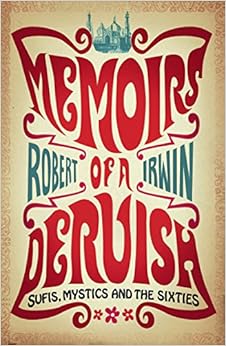
Memoirs of a Dervish: Sufis, Mystics and the Sixties, by Robert Irwin

Free Download Memoirs of a Dervish: Sufis, Mystics and the Sixties, by Robert Irwin
Book fans, when you require a new book to check out, discover the book Memoirs Of A Dervish: Sufis, Mystics And The Sixties, By Robert Irwin below. Never ever worry not to locate just what you require. Is the Memoirs Of A Dervish: Sufis, Mystics And The Sixties, By Robert Irwin your needed book currently? That's true; you are really a good visitor. This is an ideal book Memoirs Of A Dervish: Sufis, Mystics And The Sixties, By Robert Irwin that comes from wonderful author to show to you. The book Memoirs Of A Dervish: Sufis, Mystics And The Sixties, By Robert Irwin supplies the very best encounter and also lesson to take, not only take, yet likewise learn.
In some cases, reviewing Memoirs Of A Dervish: Sufis, Mystics And The Sixties, By Robert Irwin is extremely dull and also it will certainly take long period of time starting from obtaining guide as well as start checking out. Nevertheless, in modern-day age, you can take the developing technology by utilizing the web. By web, you can see this web page and also start to look for guide Memoirs Of A Dervish: Sufis, Mystics And The Sixties, By Robert Irwin that is needed. Wondering this Memoirs Of A Dervish: Sufis, Mystics And The Sixties, By Robert Irwin is the one that you require, you can choose downloading and install. Have you recognized ways to get it?
Getting the completed web content of the book even in the soft data is actually impressive. You can see how the Memoirs Of A Dervish: Sufis, Mystics And The Sixties, By Robert Irwin is presented. Before you obtain guide, you could not know regarding just what the book is. However, for even more practical thing, we will share you little bit about this book. This is the book to advise that offers you a good thing to do. It is likewise presented in very fascinating referral, instance, as well as description.
Nevertheless, reviewing guide Memoirs Of A Dervish: Sufis, Mystics And The Sixties, By Robert Irwin in this website will certainly lead you not to bring the published book almost everywhere you go. Simply keep the book in MMC or computer disk and they are readily available to review any time. The prosperous system by reading this soft file of the Memoirs Of A Dervish: Sufis, Mystics And The Sixties, By Robert Irwin can be introduced something new practice. So currently, this is time to show if reading could enhance your life or otherwise. Make Memoirs Of A Dervish: Sufis, Mystics And The Sixties, By Robert Irwin it certainly function and also obtain all benefits.
Review
A fascinating journey into the spirit and adventure of the sixties by someone who was there, and who, luckily for us, remembered every extraordinary thing. * Esther Freud * The richness of texture and tone...coupled with the unusual nature of the story...make Memoirs of a Dervish compelling, fascinating and enriching. -- Anthony Sattin * Spectator * This is a heady, insightful and melancholy trip. -- Ali Catterall * Word * What emerges here is a tale as fluid and as finally mysterious as the life it recounts...Here, at last, Irwin may have found a truly perennial philosophy. -- John Gray * New Statesman * Packed with extraordinary characters and incidents as well as (this being the sixties) a generous helping of drugs, sex and rock 'n' roll. * London Review Bookshop * Irwin's witty, casually erudite tribute to his clever, naive youth shows that there are no shortcuts to wisdom. But if often comes with age. -- Steve Jelbert * Independent on Sunday * Memoirs of a Dervish - charged with life, humanity and humour - opens one's eyes to possibilities, which was what the 1960s vibe was about, after all. * Financial Times * I could not put down Memoirs of a Dervish until I had read it twice over. This is a brilliant, free-ranging, mind-enhancing, life-cautioning book. Beware. -- Barnaby Rogerson * The Independent * Robert Irwin's memoir is a fabulously entertaining tale. * The Metro * Irwin brilliantly conjures up the mood of the late Sixties, with its blind innocence, fanciful enthusiasms and blissful music...For the reader, the journey - and the fall - is an illuminating and immensely engrossing one. -- Mick Brown * Literary Review * An extraordinary book. * Conde Nast Traveller *
Read more
About the Author
Robert Irwin is one of the best known writers on the history and culture of the Islamic world (The Arabian Nights: A Companion; The Alhambra and most recently For Lust of Knowing: the Orientalists and their Enemies). He is also an acclaimed novelist (Arabian Nightmare) and is Middle East editor of The Times Literary Supplement. He lives in London.
Read more
Product details
Paperback: 288 pages
Publisher: Profile Books; Main edition (April 17, 2012)
Language: English
ISBN-10: 9781861979919
ISBN-13: 978-1861979919
ASIN: 1861979916
Product Dimensions:
5.2 x 1 x 8.5 inches
Shipping Weight: 11.4 ounces (View shipping rates and policies)
Average Customer Review:
3.0 out of 5 stars
8 customer reviews
Amazon Best Sellers Rank:
#2,209,422 in Books (See Top 100 in Books)
Identify. Traveled these roads. Ended up pretty much same place. A bit scateredBlah blah blah blah blah blah seven
Interesting
This is a rather superficial narrative of Mr. Irwin's life in England and Algeria the 1960s and early 70s. Since he wss an initiate of one of the major Sufi orders, and spent a great deal of time with them, I read the book hoping to gain a deeper understanding of Sufi doctrine and the experience of being a Sufi. Unfortunately Irwin says very little about what Sufi doctrine is, why he concluded that "Sufism must be true," or even what his interior spiritual experience was when he participated so deeply in Sufi practice. Indeed he does not seem to have grappled much with what Sufism meant to him. I think Irwin would say that he has opted for honesty, eschewing the false coherence and doctrinal certainty of a true believer's conversion narrative. While I appreciate that, somehow the resulting book imparts very little of what his deeper subjective experience was, except to provide a chronology of events and passing phases in Irwin's younger days. Because he stops the book abruptly in the early 1970s, we are left wondering whether and how Sufism has continued to play a role in his life -- i.e. what his long term view is of his early religious experience. What did he learn? How did it change him?
Watching fake surgery on TV will not make you a surgeon. Watching most probably imitation Sufis will not make you a Sufi.There are books by the contemorary Sufi exponent, Idries Shah, which can teach you about yourself if your greed to use the new knowledge for the old unrgenerate self will not veil you from what you read.Go for the real. I once did.
Seems to be a lot of criticism of this book and its author among the other reviewers. I dissent. Although one can certainly fault Irwin for making some poor "life choices" and doing some pretty woolly thinking in his youth - and who hasn't - to do so is to miss the point. To miss the forest for the trees. I've this book twice and will read it again. Recommend lt.
Mr. Irwin says toward the end of the book that if there was something to "get" as a dervish, he basically didn't get it. The entire book is a demonstration of this, as Mr. Irwin chronicles after his initiation in Algeria that he returned to England and dabbled in drugs, satanism, Scientology and the like. He makes his own case for why he is not an adequate reporter of life as a dervish.He also says that the 60's and the culture of the 60's was a wash and came to nothing.I am getting really tired of people saying that the 60's came to nothing. Let's take the time period form 1964 to 1974. (1960 and 1961 were more like the 50's than the later 60's.) During this time period Cesar Chavez organized farmworkers to unionize, advocate and strike for their rights. There were national boycotts of farm products in support of farmworkers. I remember living in Detroit during one of these boycotts and marching for over a mile with people holding signs that said Yes We Can! in Spanish. We marched in the winter cold until we gathered together in a Catholic Church, which was warm inside. There were candles lit. We sang. We drank Mexican hot chocolate together and experienced the power of people who gather together and stand up to power to assert the people's rights.That was powerful stuff. That was the 60's and early 70's.The ecology movement took shape in the 1960's with the first Earth Day in 1970. The idea that we are responsible for what we do to the earth, and if we treat the earth badly that will have consequences for us, really took hold in the consciousness of people in the United States.Representatives of Eastern religions came to the United States in great numbers in the 1960's and early 70's. While some of them were fakes and power hungry, there were those who in earnest encouraged Americans to look beyond the ego and gratification through consumerism to something deeper. That sense of spiritual yearning that was so strong in the 1960's has never since faded.In this time period the Beatles sang "Love is all you need." There was truth in songs like these, that said that love is the essence of the meaning of life.The 60's and early 70's saw an emphasis on communal life and community service. Some people took that message to heart and built their live's work around those values. There were "seeds" in the 60's and 70's- teaching us that a life of service is a worthy life.While the clothes in the 1950's were fashionable. they were also fairly constricting, especially for women. In the 1960's women started wearing more comfortable clothes- jeans, tee shirts, sandals. It became increasingly acceptable for clothes to be both colorful and comfortable.Mr. Irwin also said that the only TV show worth watching during the 1960's was "The Prisoner." "The Prisoner" was a worthy show, but so was "The Outer Limits", which Mr. Irwin totally ignores. He also leaves out "The Twilight Zone", "Star Trek" and the often biting comedy of "The Smother's Brothers Comedy Hour." He also leaves out "Soul Train" which had a lot of impact on our culture and started its run on television in 1971.In the 60's and early 70's the field of humanistic psychology blossomed, and there was an increasing sense of respect for and recognition of the dignity of people who came for counseling. The Association for Humanistic Psychology was founded in 1961. The rise of humanistic psychology and the increasing influence of client-centered psychology (which had been developed earlier) effectively confronted earlier models of psychology that assumed that the entire problem someone might experience was only within themselves, rather than also possibly in their families, communities and societies. Community psychology looked at how it was possible for social systems to be ill, and that community empowerment and change were effective responses.So how can Mr. Irwin, who says he didn't get what there was to get as a Sufi, say there was also nothing to get in the 60's? It is probably closer to the truth to say he just pretty much missed out on the gifts of that decade as well.
From the review by Mick Brown in the Literary Review (April 2011): "This delightfully eccentric memoir begins with one of the most arresting opening sentences I have read in a long time. 'It was in my first year at Oxford,' Robert Irwin writes, 'that I decided that I wanted to become a Muslim saint'...For the reader, the journey is an illuminating and immensely engrossing one."
Is filled with pure lies, every time he talks about some author or something that would require some quoting he lies.For example "Hitler? Is Guenon with Panzers" wasnt a joke by Julius Evola . Is in "The Morning of the Magicians" , 'national socialism is guenonism plus panzers'. Is the real and original quote.I wont type more. He's not worth it.
Memoirs of a Dervish: Sufis, Mystics and the Sixties, by Robert Irwin PDF
Memoirs of a Dervish: Sufis, Mystics and the Sixties, by Robert Irwin EPub
Memoirs of a Dervish: Sufis, Mystics and the Sixties, by Robert Irwin Doc
Memoirs of a Dervish: Sufis, Mystics and the Sixties, by Robert Irwin iBooks
Memoirs of a Dervish: Sufis, Mystics and the Sixties, by Robert Irwin rtf
Memoirs of a Dervish: Sufis, Mystics and the Sixties, by Robert Irwin Mobipocket
Memoirs of a Dervish: Sufis, Mystics and the Sixties, by Robert Irwin Kindle
0 komentar:
Posting Komentar